
Best Smart Doorbells for Canadian Winters: What Actually Holds Up in the Cold

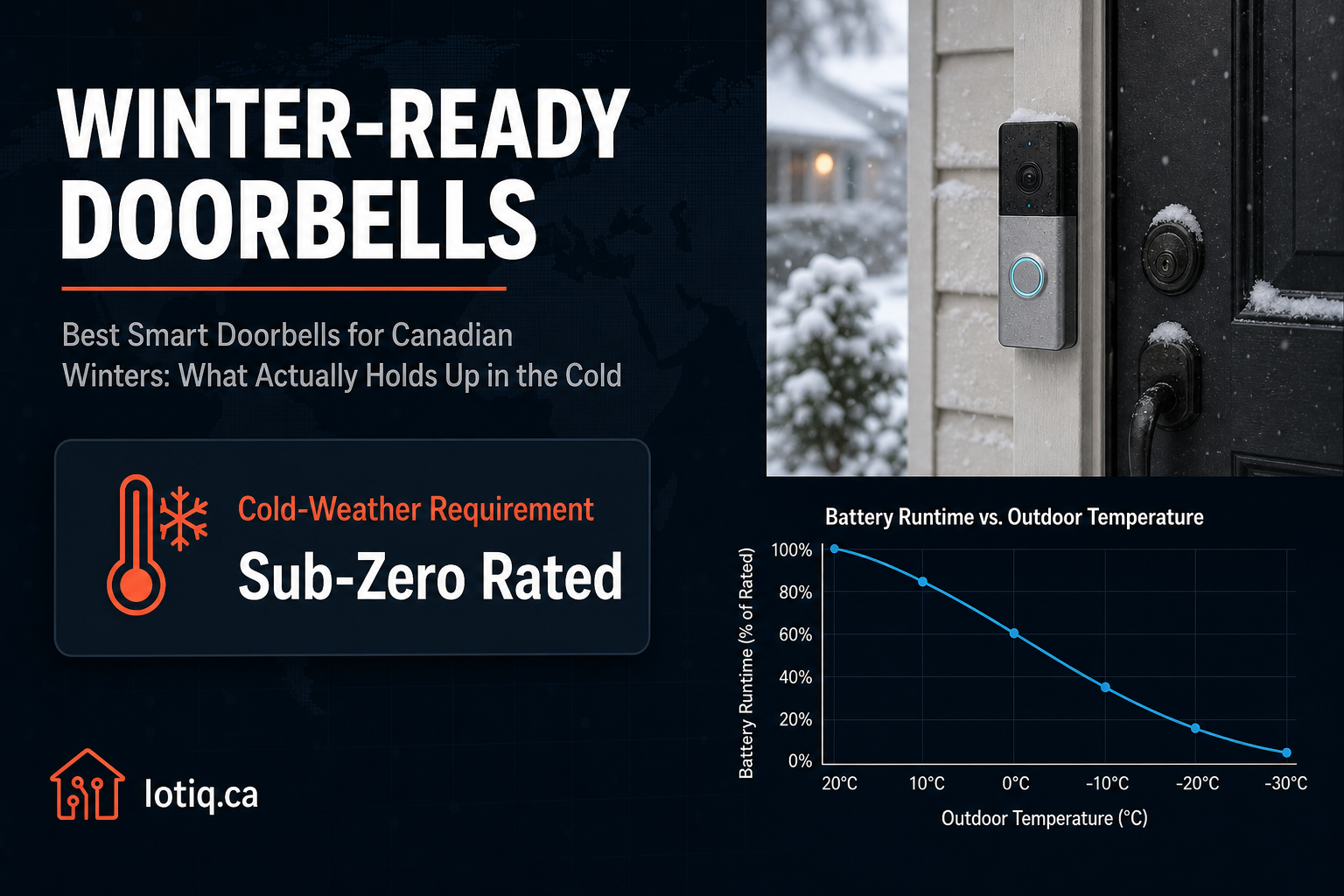
A video doorbell that works fine in a showroom can behave very differently after its first real Canadian winter. Cold weather affects battery-powered doorbells in ways most spec sheets don’t mention, and the difference between a doorbell that’s merely “weather-resistant” and one actually rated for sub-zero conditions shows up exactly when you need it most — during a snowstorm, not a mild October afternoon.
What Cold Actually Does to a Video Doorbell
Two separate things happen to a doorbell in winter, and they affect wired and battery-powered models differently:
- Battery capacity drops in the cold. This is basic lithium battery chemistry, not a product flaw — cold temperatures reduce a battery’s effective capacity, meaning a battery-powered doorbell that lasts two months in summer might need recharging noticeably more often in January. If you’re choosing a battery model, this is worth planning around rather than being surprised by.
- Camera and motion sensors can behave differently in snow. Falling snow, wind-blown snow, and temperature swings that fog a lens are the leading cause of false motion alerts in winter — which is exactly why AI-based person detection matters more here than it does in a milder climate. A doorbell that only detects generic motion will flag every snow flurry; one that specifically recognizes a human shape filters that out.
Wired vs Battery: The Winter-Specific Trade-Off
| Wired doorbell | Battery-powered doorbell | |
|---|---|---|
| Cold-weather reliability | Unaffected by temperature — continuous power | Reduced runtime in cold; needs more frequent charging in winter |
| Installation | Needs existing low-voltage wiring, or a new run | No wiring required — mounts anywhere with a decent Wi-Fi signal |
| Best for | Homes with existing doorbell wiring, or anyone who doesn’t want a recurring charging task | Renters, condos, or anywhere wiring isn’t practical or permitted |
If you already have working doorbell wiring, a wired model removes the winter battery question entirely. If you don’t — or you’re in a rental or condo where wiring isn’t an option — a battery model is still the right call, just budget for more frequent charging once temperatures drop, and consider a model with a chime-only fallback so the doorbell still functions physically even between charges.
What “Weather-Rated” Should Actually Mean
“Weather-resistant” on a spec sheet can mean anything from “won’t fail in light rain” to “tested for sustained sub-zero temperatures and heavy snow load.” Before buying, look for an explicit operating temperature range, not just an IP (ingress protection) rating — IP ratings describe resistance to dust and water, not cold tolerance, and a doorbell can be well-sealed against moisture while still struggling with extreme cold. A doorbell genuinely built for Canadian conditions should specify performance down to sub-zero temperatures, not just “outdoor use.”
Local Storage: A Winter-Adjacent Reason to Care
This isn’t strictly a cold-weather issue, but it compounds with one: winter storms are also when internet and power outages spike, which is exactly when cloud-dependent doorbells stop recording new footage or alerting you at all. A doorbell that stores footage locally on your own network, rather than requiring a live connection to a manufacturer’s cloud, keeps working — and keeps your recordings private — through the kind of connectivity gaps a bad winter storm reliably produces. It’s also worth checking whether local storage requires an ongoing subscription; a genuinely local-storage doorbell shouldn’t need one.
Practical Buying Checklist for a Canadian Winter
- Confirm an explicit sub-zero operating temperature rating, not just a general “weatherproof” claim.
- Choose AI person detection over generic motion detection if you want to avoid a phone full of snowfall alerts.
- If going battery-powered, ask about realistic winter runtime, not just the advertised summer figure.
- Check whether footage storage is local or cloud-dependent, and whether local storage requires a subscription.
- If you’re in a condo or rental, confirm a wireless, non-wired model is acceptable before buying — check with your building or landlord first.
Where to Look
See the smart doorbells page for current wired and wireless model options with sub-zero weather ratings and local-storage-by-default recording.
Quick Answers
Does an IP rating tell me if a doorbell can handle Canadian cold? No. IP ratings describe dust and water resistance, not cold tolerance. Look for an explicit sub-zero operating temperature range instead.
Will a battery-powered doorbell still work if my Wi-Fi goes down? The physical chime keeps working, but remote viewing and phone notifications require an internet connection — that’s true for wired models too.
