
Smart Home Security Devices Every Canadian Homeowner Should Consider

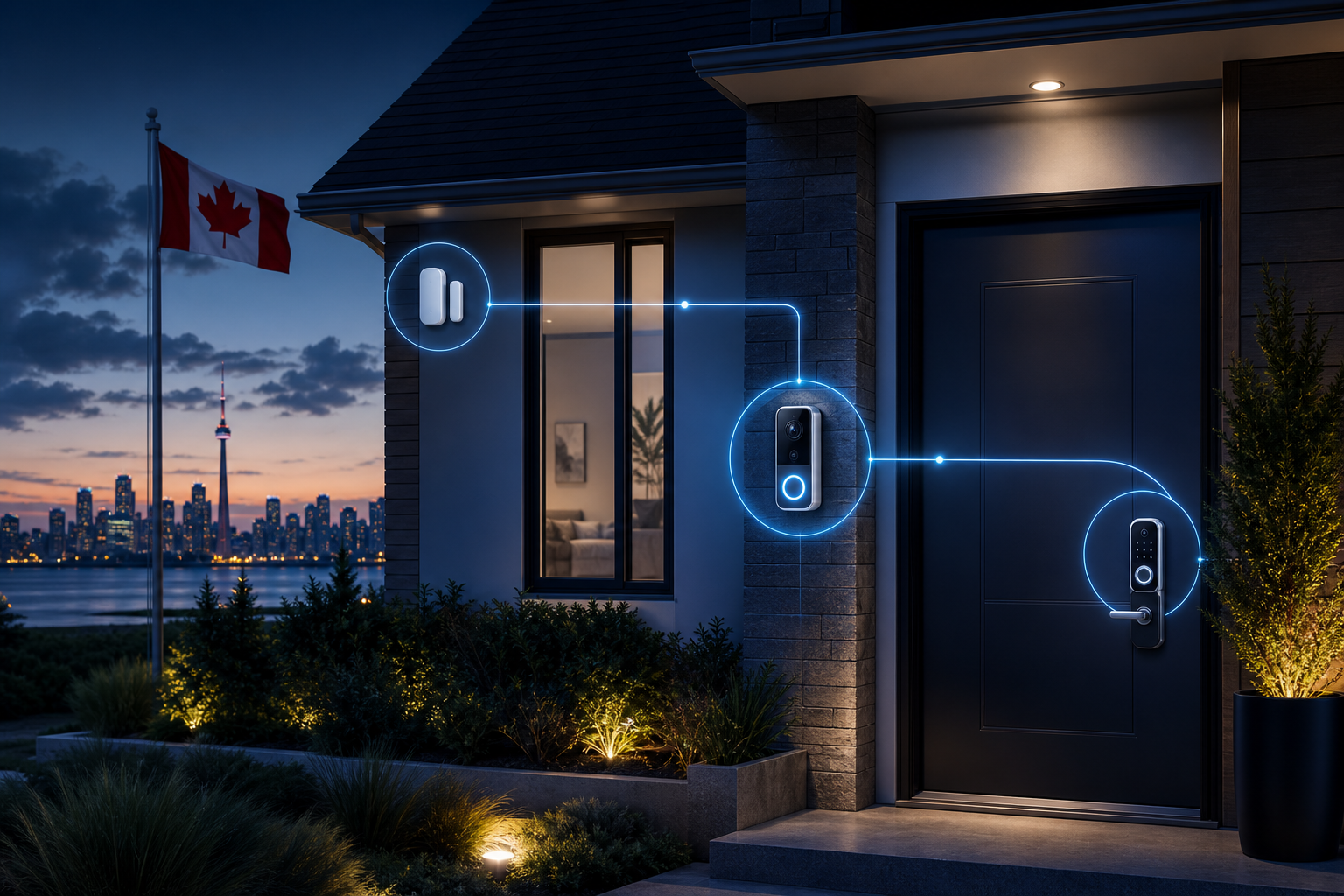
Home security used to mean an alarm system and maybe a camera above the front door. Today’s smart security devices do more because they share data and context with each other — a door sensor that knows a motion sensor just triggered in the same room tells a very different story than either signal alone. Building a smart security setup is less about buying the most devices and more about covering the right layers.
Think in Layers, Not Individual Devices
The most effective smart security setups are built around three layers that work together rather than any single “best” device: perimeter awareness (knowing when someone approaches or enters), interior detection (knowing what’s happening inside once perimeter defenses are crossed), and access control (managing who can get in, and when). A setup with one excellent camera but no other layer leaves real gaps — a camera only tells you something happened, it doesn’t prevent or contextualize it the way a layered system can.
Perimeter: Video Doorbells and Outdoor Cameras
Video doorbells and outdoor cameras are usually the first layer people add, and for good reason — they cover the most common entry point (the front door) and provide the clearest, most immediately useful footage. Look for devices with reliable motion detection zones (so you’re not alerted every time a car passes on the street) and two-way audio, which lets you speak to a delivery person or a visitor without opening the door — a meaningfully different capability than a camera that only records.
Access Control: Smart Locks and Garage Door Controllers
Smart locks replace or augment a traditional deadbolt with code-based, app-based, or key-fob access, which solves a specific problem physical keys can’t: giving temporary or scheduled access (to a dog walker, contractor, or family member) without copying a physical key, and instantly revoking that access when it’s no longer needed. A smart garage door controller extends the same logic to a garage — for many homes, an unmonitored garage door is a more overlooked entry point than the front door itself.
Interior Detection: Motion, Contact, and Environmental Sensors
| Sensor Type | What It Detects | Common Use |
|---|---|---|
| Motion sensors | Movement within a room | Interior alerts, and triggering lights/cameras when armed |
| Window/door contact sensors | Whether a window or door has been opened | Confirming entry points are secure; alerting on unexpected openings |
| Vibration sensors | Impact or forced-entry attempts on doors/windows | Earlier warning than a contact sensor alone, since it can catch tampering before actual entry |
| Sirens and alarms | Audible deterrent triggered by other sensors | Immediate on-site deterrent, separate from app notification |
| Gas and smoke detectors | Smoke, CO, or gas leaks | Life-safety monitoring, not intrusion — but part of a complete home safety layer |
Contact sensors on doors and windows are often the highest-value starting point after a video doorbell, since they directly answer “is this specific entry point currently open or closed” — a simple binary signal that’s cheap to deploy across every window and door in the home.
Making the Layers Work Together
The real advantage of a connected security setup over standalone devices is combining signals into smarter automations: a motion sensor triggering while the home is in “away” mode can automatically start recording on nearby cameras and send a push notification, rather than relying on someone actively watching a live feed. This kind of cross-device automation is exactly what a hub-based system (see our guide on setting up a smart home hub) makes possible, versus a collection of separate single-brand apps that can’t share triggers with each other.
A Practical Starting Setup
- Video doorbell — covers the most common entry point and provides the clearest immediate value.
- Contact sensors on ground-floor windows and doors — inexpensive per unit and covers the entry points intruders most commonly use.
- One or two motion sensors in main interior pathways — hallways or main rooms an intruder would need to cross.
- A smart lock on the primary entry door — once you’re comfortable with the app-based system controlling other devices.
- Siren and camera integration — added once the sensor layer is in place, so alerts have real signal behind them rather than triggering on every random motion event.
