YOLO Object Detection Explained for Business Leaders: Real-Time AI Vision Without the Jargon


If you have evaluated an AI camera system, someone has said “YOLO” to you as though it settled the question. It does not. YOLO is a family of object detection models, and knowing that a vendor uses one tells you roughly as much about their system as knowing a builder uses power tools tells you about the house.
What YOLO Means, Without the Jargon
YOLO stands for “You Only Look Once.” It was introduced in a 2015 research paper by Joseph Redmon and colleagues, and the name describes its central idea. Earlier object detection approaches worked in two stages: first propose a few thousand regions of the image that might contain something, then classify each region separately. Accurate, but slow — too slow for live video.
YOLO reframed detection as a single pass. One neural network looks at the whole image once and predicts, simultaneously, where objects are and what they are. That architectural change is what made real-time object detection on live video streams practical, and it is why the approach became the default for camera analytics.
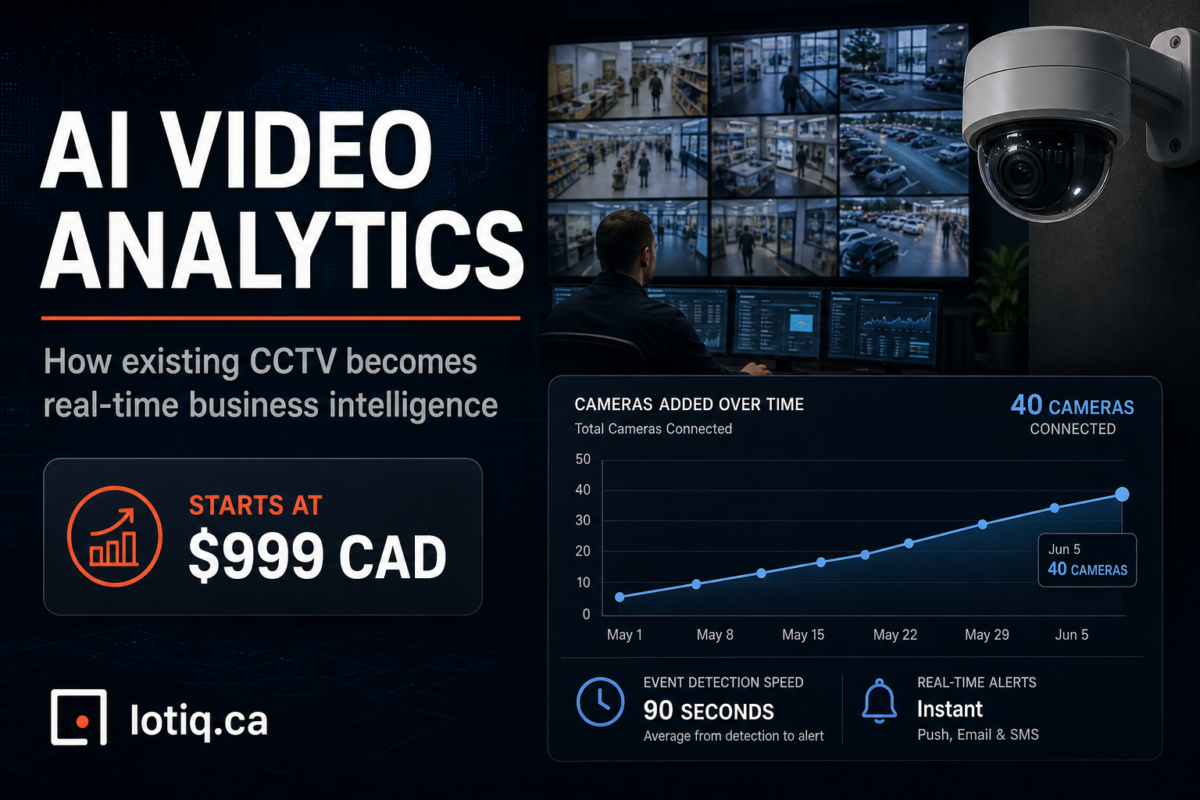
The output is simple to describe: for each frame, a list of boxes, each with a label and a confidence score. “Person, 94% confidence, at these coordinates. Forklift, 88%, at these coordinates.” Everything else — zones, rules, alerts, counting, tracking across frames — is built on top of that list, and none of it is YOLO.
Why Real Time Is the Whole Point
A detector that takes two seconds per frame can analyse recorded footage. It cannot support a system that turns on a light when someone enters a restricted zone, because the light needs to come on now. Real-time detection is what allows a camera to participate in a control loop rather than an archive.
Two practical consequences follow. First, frame rate is a design decision with real trade-offs — detecting a person walking into a zone works at a few frames per second, while measuring a forklift’s speed at a corner needs considerably more. Second, running detection on many camera streams at once requires proportionate compute, which is why site design involves counting streams and required frame rates, not just cameras.
What It Detects Out of the Box, and What It Does Not
Off-the-shelf detection models are typically trained on general-purpose public datasets containing common categories — people, cars, trucks, bicycles, animals, everyday objects. That covers a surprising amount of commercial security and traffic work with no custom training at all.
What a general model does not know is anything specific to your operation:
| Works out of the box | Requires custom training |
|---|---|
| Person, vehicle, truck, bicycle, animal | Your specific product on a conveyor |
| Common objects in a lobby or yard | A defect type unique to your process |
| General traffic and pedestrian scenarios | Company-specific equipment or uniforms |
| Basic occupancy and counting | Unusual camera angles, such as directly overhead or through glass |
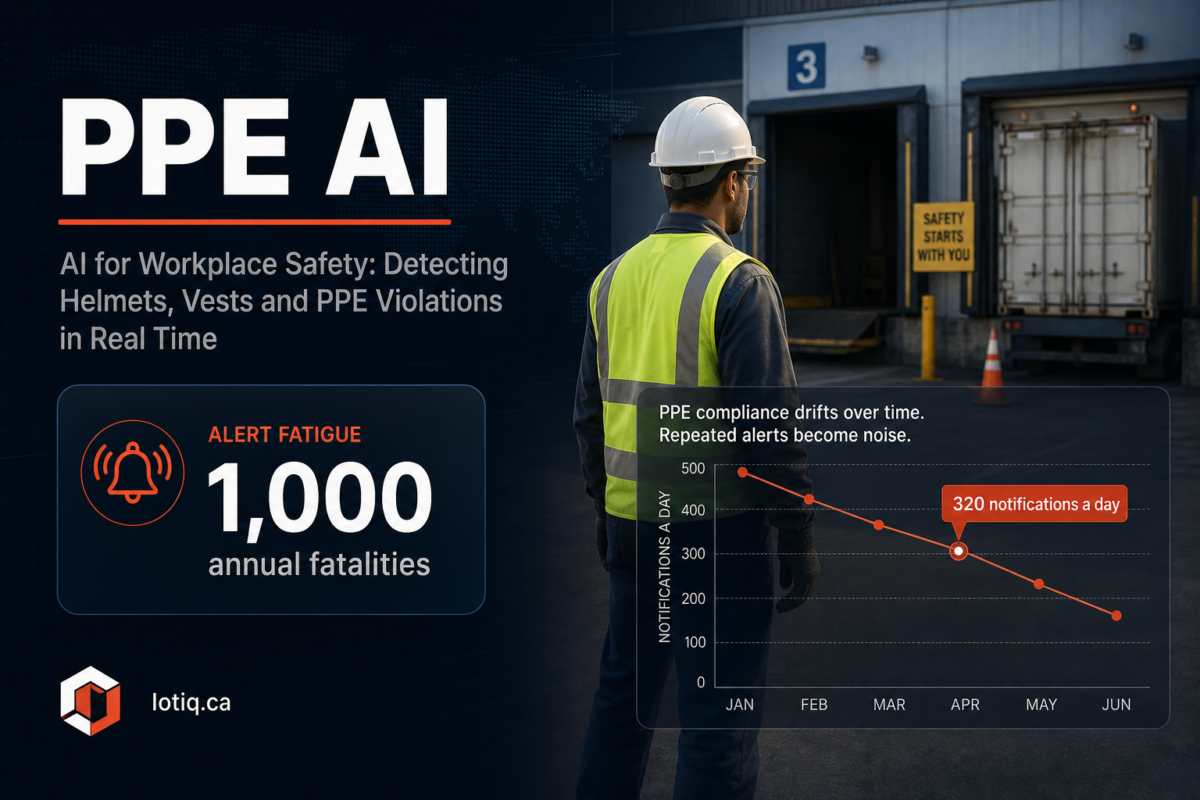
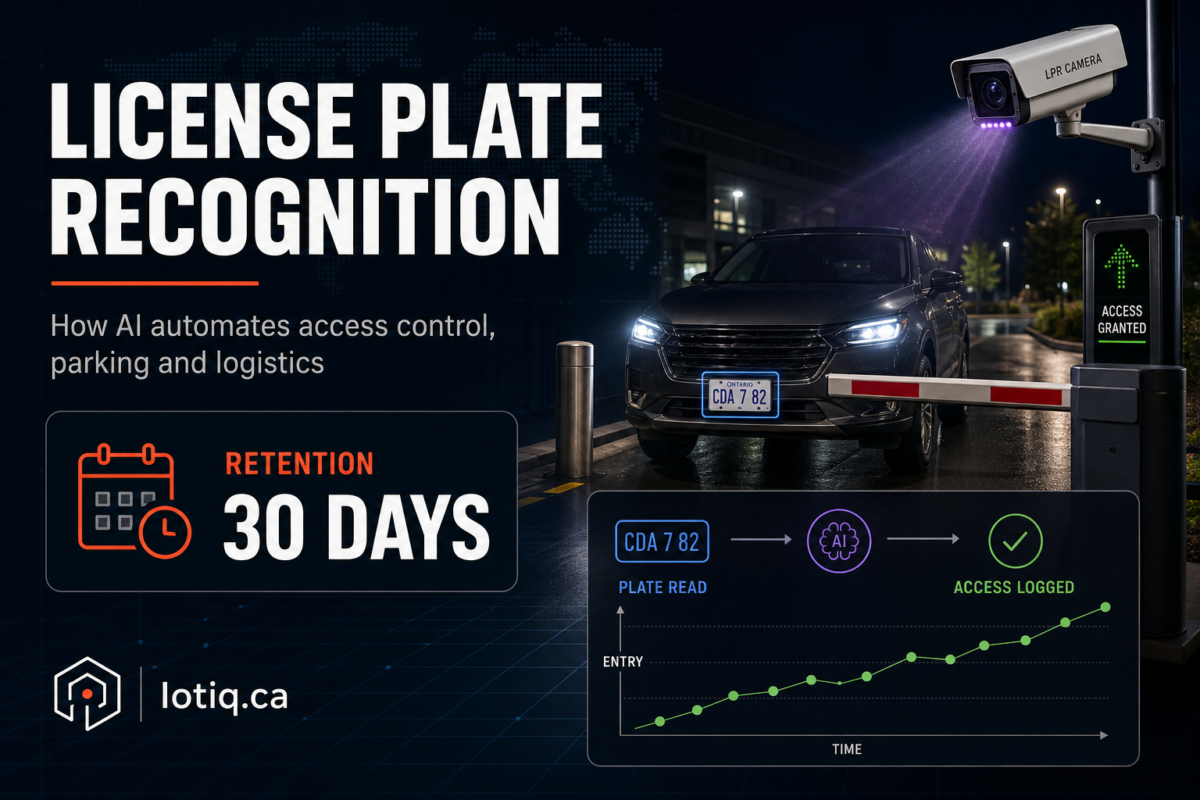
| Hard hats and hi-vis vests (widely available models) | Regionally specific signage, plates or label formats |
The practical rule: if a category appears frequently on the public internet, a general model probably handles it. If it only exists inside your facility, it needs your images.
When Custom Training Is Worth It
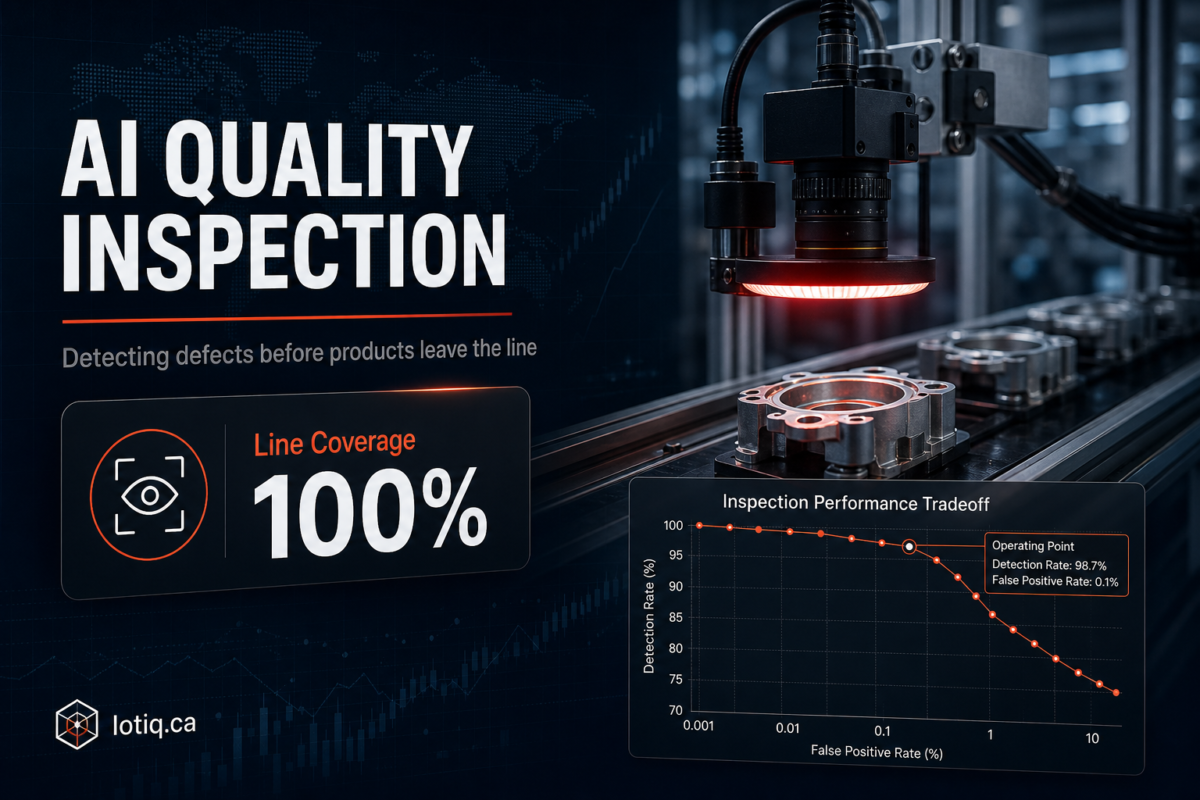
Custom training means collecting images from your actual cameras, labelling them, and fine-tuning a model. It is a real project with a real cost, and it is justified in specific circumstances:
- The object is unique to you — your product, your packaging, your equipment.
- Your camera angle is unusual — overhead or extreme angles differ enough from typical training data that accuracy drops noticeably.
- Your environment is unusual — heavy dust, steam, cold-storage condensation, or unusual lighting.
- The required accuracy is high and the failure cost is high — an inspection station rejecting product needs tighter performance than a yard camera counting trucks.
Conversely, custom training is usually not the answer when the real problem is camera placement, lighting, or rule configuration. A meaningful share of “the model is not accurate enough” complaints are resolved by moving a camera two metres and adding illumination, at a fraction of the cost of a training project.
What the Confidence Score Actually Tells You
Every detection carries a confidence value, and it is routinely misread. It is the model’s internal score for that detection — not a probability that the system is correct in any calibrated sense, and not a quality rating. Its practical use is as a threshold you tune:
- Lower the threshold and you catch more true events and more false ones. Appropriate for safety-critical detections where a miss is worse than a false alarm.
- Raise it and you get fewer, more reliable detections, at the cost of missing marginal cases. Appropriate for high-volume alerting where noise is the main risk.
This threshold is a business decision disguised as a technical setting, and it should be made deliberately per use case rather than left at a default.
The Questions Actually Worth Asking a Vendor
Model architecture is rarely the differentiator. These questions are:
- Where does inference run — on site or in the cloud — and what happens to detection when the internet drops?
- What video or data leaves the premises, and what is retained where?
- What is the expected alert volume after tuning, for a site like ours?
- How are zones, schedules and thresholds configured, and can we change them ourselves later?
- What does the system integrate with — lights, locks, access control, dashboards — or is it a standalone app?
- What happens on failure — do we get told the analytics stopped, or does silence look the same as “nothing happened”?
That last question separates serious deployments from demonstrations. A detection system that fails silently is worse than none, because it manufactures confidence that coverage exists.
Where IoTiq Sits in This
IoTiq’s position is that the model is a component, not the product. What makes camera analytics useful in a commercial building is the layer around it: local processing so the site keeps working without internet, rules tuned to the actual space, integration with lighting, access and alerts, and a dashboard that spans locations. See how it is packaged by business type.
Quick Answers
What is YOLO in AI? YOLO — “You Only Look Once” — is a family of object detection models, introduced in 2015, that identify what objects are in an image and where they are in a single pass through one neural network. That single-pass design is what made real-time detection on live video practical.
Does a business need a custom-trained model? Usually not for people, vehicles, hard hats and similar common categories, which general models handle well. Custom training is justified when the object is specific to your operation, the camera angle or environment is unusual, or accuracy requirements are high — such as product inspection.
What does the confidence score mean? It is the model’s internal score for a detection, not a calibrated probability of correctness. Its practical use is as a tunable threshold: lower it to catch more events at the cost of more false alarms, raise it for fewer and more reliable detections. That trade-off should be set per use case.
Related Guides
Talk to IoTiq
If you are comparing vendors and the pitches all sound the same, the differences are usually in where processing runs, alert volume after tuning, and what the system integrates with. Book a free assessment and we will answer those directly for your site.